Biological Safety Cabinet vs Laminar Flow Cabinet: Key Differences, Uses, Safety and Buying Guide
Introduction
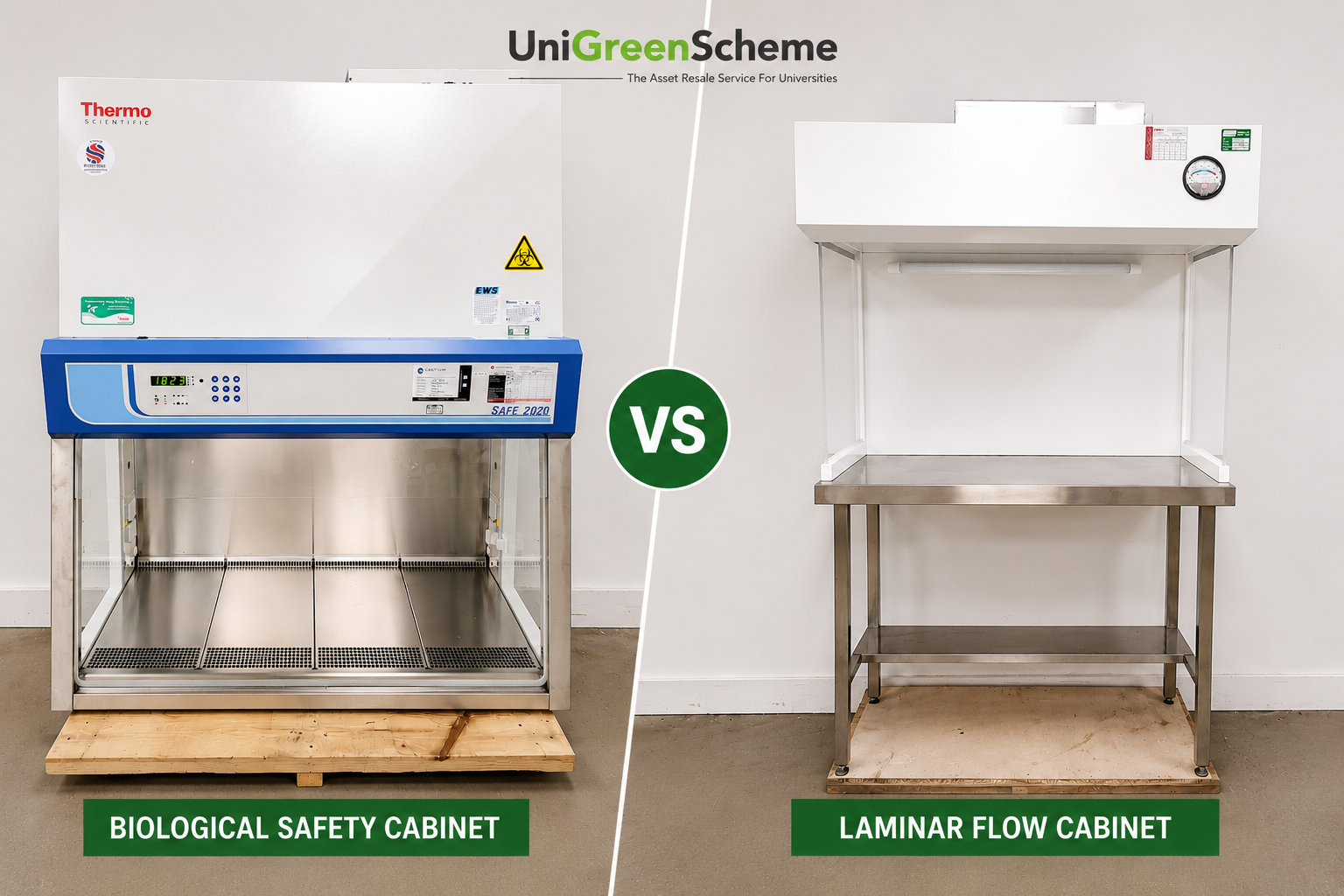
When comparing a biological safety cabinet vs a laminar flow cabinet, the most important difference is what each system is designed to protect.
A biological safety cabinet protects the operator, the laboratory environment and often the sample itself from hazardous biological materials. A laminar flow cabinet, sometimes called a laminar flow hood or clean bench, is designed primarily to protect the sample or product from airborne contamination.
Although these laboratory cabinets can appear similar, they are built for very different applications. Choosing the wrong cabinet can lead to contamination risks, operator exposure, failed compliance requirements and damage to sensitive samples or products.
At UniGreenScheme, laboratories and research organisations can source used biological safety cabinets and laminar flow cabinets as a cost-effective and sustainable alternative to buying new laboratory equipment.
Biological Safety Cabinet vs Laminar Flow Cabinet: Quick Comparison
The core difference is containment versus cleanliness.
A biological safety cabinet contains hazardous biological materials and protects the user. A laminar flow cabinet creates a clean, sterile environment to protect the sample.
| Feature | Biological Safety Cabinet | Laminar Flow Cabinet |
|---|---|---|
| Main purpose | User, sample and environmental protection | Sample and product protection |
| Suitable for hazardous biological materials | Yes, depending on cabinet class | No |
| User protection | Yes | No or limited |
| Environmental protection | Yes | No |
| Sample protection | Yes, particularly Class II and Class III | Yes |
| Typical applications | Microbiology, clinical labs, cell culture and pharmaceutical research | Cleanrooms, electronics, medical devices and sterile non-hazardous preparation |
What Is a Biological Safety Cabinet?
A biological safety cabinet, also known as a BSC, is an enclosed and ventilated laboratory cabinet designed for safely handling biological materials that may pose a risk to humans or the environment.
Biological safety cabinets use HEPA-filtered airflow and controlled pressure systems to contain potentially hazardous particles and microorganisms. They are commonly used in microbiology, pharmaceutical manufacturing, clinical diagnostics, biotechnology, cell culture and hospital laboratories.
How does a biological safety cabinet work?
A biological safety cabinet works by controlling airflow inside an enclosed workspace. Contaminated air is drawn away from the operator and passed through HEPA filters before being safely exhausted or recirculated.
Biological Safety Cabinet Classes Explained
| Cabinet Class | Protection Level | Typical Uses |
|---|---|---|
| Class I | User and environmental protection | Basic microbiological work |
| Class II | User, environmental and sample protection | Cell culture, diagnostics, pharmaceutical work and research |
| Class III | Maximum containment | High-risk pathogens and specialist containment work |
What Is a Laminar Flow Cabinet?
A laminar flow cabinet, sometimes called a laminar flow hood or clean bench, is a clean-air workstation designed to protect samples, products or components from airborne contamination.
Unlike biological safety cabinets, laminar flow cabinets are focused on protecting the sample rather than protecting the user. They are widely used in electronics manufacturing, cleanrooms, optical engineering, semiconductor manufacturing, medical device assembly and non-hazardous sterile preparation.
Horizontal vs Vertical Laminar Flow Cabinets
| Type | Airflow Direction | Main Benefit |
|---|---|---|
| Horizontal laminar flow cabinet | Air moves horizontally towards the operator | Excellent product and sample protection |
| Vertical laminar flow cabinet | Air moves downward onto the workspace | Reduced airflow disruption and improved operator comfort |
Which Cabinet Should You Choose?
Choose a biological safety cabinet if:
- You are handling infectious biological agents.
- You are working with microbiological hazards.
- User safety is essential.
- Environmental containment is required.
- You are handling cell cultures, pathogens or biological samples.
Choose a laminar flow cabinet if:
- You are handling non-hazardous materials.
- Product or sample sterility is the main priority.
- You need a particle-controlled workspace.
- You are working in electronics, cleanroom or medical device manufacturing.
Maintenance, Certification and Compliance
Regular maintenance and certification are essential for both biological safety cabinets and laminar flow cabinets. Over time, HEPA filters, airflow systems, cabinet seals and fans can degrade, reducing performance and increasing contamination risks.
Biological safety cabinets typically require HEPA filter integrity testing, airflow velocity testing, leak testing, smoke pattern airflow testing and alarm checks. Laminar flow cabinets also require routine servicing to maintain clean airflow and contamination control.
Buying second hand Biological Safety Cabinets and Laminar Flow Cabinets
Many laboratories choose second hand laboratory equipment to reduce costs, improve procurement efficiency and support sustainability targets.
When buying used biological safety cabinets or laminar flow cabinets, laboratories should check whether the equipment has been PAT tested and has come from a reputable reseller.
Conclusion
Understanding the difference between a biological safety cabinet and a laminar flow cabinet is essential for laboratory safety, contamination control and compliance.
Biological safety cabinets are designed for containment and protection from hazardous biological materials. Laminar flow cabinets are designed to maintain sterile working environments for non-hazardous applications.
For organisations seeking sustainable and cost-effective laboratory equipment solutions, UniGreenScheme supplies used and recertified biological safety cabinets and laminar flow cabinets that help reduce procurement costs while supporting the circular economy within the scientific sector.
Frequently Asked Questions
What is the difference between a biological safety cabinet and a laminar flow cabinet?
A biological safety cabinet protects the user, environment and sample from hazardous biological materials. A laminar flow cabinet mainly protects the sample from airborne contamination.
Can a laminar flow cabinet be used for microbiological work?
No. Laminar flow cabinets should not be used for hazardous biological materials because they do not provide containment or reliable user protection.
What is a Class II biological safety cabinet used for?
Class II biological safety cabinets are commonly used for cell culture, microbiology, pharmaceutical work, clinical diagnostics and research applications where both operator and sample protection are needed.
Do laminar flow cabinets use HEPA filters?
Yes. Laminar flow cabinets use HEPA filtration to create clean, controlled airflow across the workspace.
No comments yet. Login to start a new discussion Start a new discussion