The Lifecycle of Laboratory Equipment: Building a Circular Economy in the Lab
This article explores how circular economy practices such as reuse, refurbishment, and redistribution can extend the lifecycle of laboratory equipment, helping organisations reduce waste, lower costs, and support more sustainable scientific operations.
Introduction
Laboratories around the world rely on advanced equipment to drive scientific discovery, support research, and deliver critical testing and analysis. However behind every centrifuge, microscope, freezer, or chromatography system lies a significant environmental footprint. From raw material extraction and manufacturing to global shipping and disposal - laboratory equipment consumes substantial resources throughout its lifecycle.
Traditionally many laboratories have operated within a linear model of procurement: buy new equipment and use it for a period of time and then store, replace, or dispose of it when requirements change. In many cases perfectly functional instruments are retired long before the end of their usable life due to upgrades, lab relocations, funding changes, or evolving research priorities.
As sustainability becomes a growing priority across science, healthcare, education and industry, more organisations are beginning to rethink this approach. Circular economy principles are helping laboratories extend the life of equipment through reuse, refurbishment, resale or responsible recycling. Rather than becoming waste, surplus laboratory equipment can continue supporting scientific work in other facilities around the world.
A 2019 report
estimated that the global healthcare sector contributes approximately 4.4% of worldwide net greenhouse gas emissions.
Building a circular economy in laboratory science not only helps reduce waste and supply chain emissions, but can also lower procurement costs, as well as maximise asset value and improve access to quality equipment. By keeping laboratory equipment in use for longer, organisations can reduce environmental impact while supporting a more sustainable and efficient future for science.
In this article we explore the lifecycle of laboratory equipment, the challenges of traditional disposal methods, and how circular economy practices are transforming the way laboratories manage scientific assets.
What Is a Circular Economy in Laboratory Science?
A circular economy is a model designed to reduce waste and make better use of existing resources by keeping products and materials in circulation for as long as possible. In laboratory science this means extending the usable life of laboratory equipment through reuse, refurbishment, resale, repair, and responsible recycling.
Unlike the traditional linear economy model of “buy, use, dispose”, a circular approach focuses on maximising the value of equipment at every stage of its lifecycle. Rather than sending surplus instruments to storage or waste streams, laboratories can redistribute equipment to other organisations where it can continue supporting research, testing, and innovation.
| Traditional Linear Model | Circular Economy Model |
|---|---|
| Buy new equipment | Reuse existing equipment |
| Use equipment temporarily | Extend operational lifespan |
| Dispose of surplus assets | Refurbish and redistribute |
| Replace with new products | Recover value from assets |
| Generate waste | Reduce waste and emissions |
This creates a significant opportunity for reuse. Many instruments that are no longer needed in one laboratory can still provide years of value elsewhere. Equipment such as centrifuges, balances, microscopes, freezers, incubators, and analytical systems can often be refurbished, tested, and returned to active use.
A circular economy in laboratory science also supports broader sustainability goals. By reducing demand for newly manufactured equipment, organisations can help lower carbon emissions, minimise raw material consumption, and reduce the amount of waste entering landfill or recycling streams.
As sustainability targets become increasingly important across scientific sectors, circular economy practices are becoming an essential part of modern laboratory management and procurement strategies.
Learn more about the circular economy and how it supports more sustainable resource management.
The Traditional Lifecycle of Laboratory Equipment
Laboratory equipment often follows a surprisingly short and inefficient lifecycle. While many scientific instruments are designed to operate for years, or even decades, a large proportion are removed from service long before the end of their functional life. In many cases, equipment is replaced due to changing organisational requirements rather than mechanical failure.
This traditional “take, use, dispose” model contributes to unnecessary waste, avoidable carbon emissions, and increased procurement costs across the scientific sector.
Procurement and Manufacturing
The lifecycle of laboratory equipment begins with manufacturing, a process that can carry a significant environmental impact. Scientific instruments often require complex manufacturing processes, specialist materials, precision engineering, electronics, plastics, metals, and global supply chains.
Many laboratory products are manufactured overseas before being transported internationally to distributors, laboratories, universities, healthcare facilities, and industrial sites. This process consumes energy, generates emissions, and relies heavily on raw material extraction.
For highly specialised instruments such as chromatography systems, spectrometers, and ultra-low temp freezers, the environmental footprint associated with production can be substantial before the equipment is even switched on for the first time.
Short Operational Lifespans
Despite their durability, many laboratory assets remain in active use for only a relatively short period within their original organisation.
There are several common reasons for this:
- Laboratory upgrades and modernisation projects
- Changes in research focus or testing requirements
- Department relocations or closures
- Funding cycles and grant renewals
- Mergers or restructuring
- Procurement of newer models despite existing functionality
- Support or warranty period ended on the equipment
In many facilities unused instruments may remain in storage rooms, corridors, warehouses or storage spaces for months or even years. This not only creates space pressures, but can also lead to missed opportunities for asset recovery and reuse.
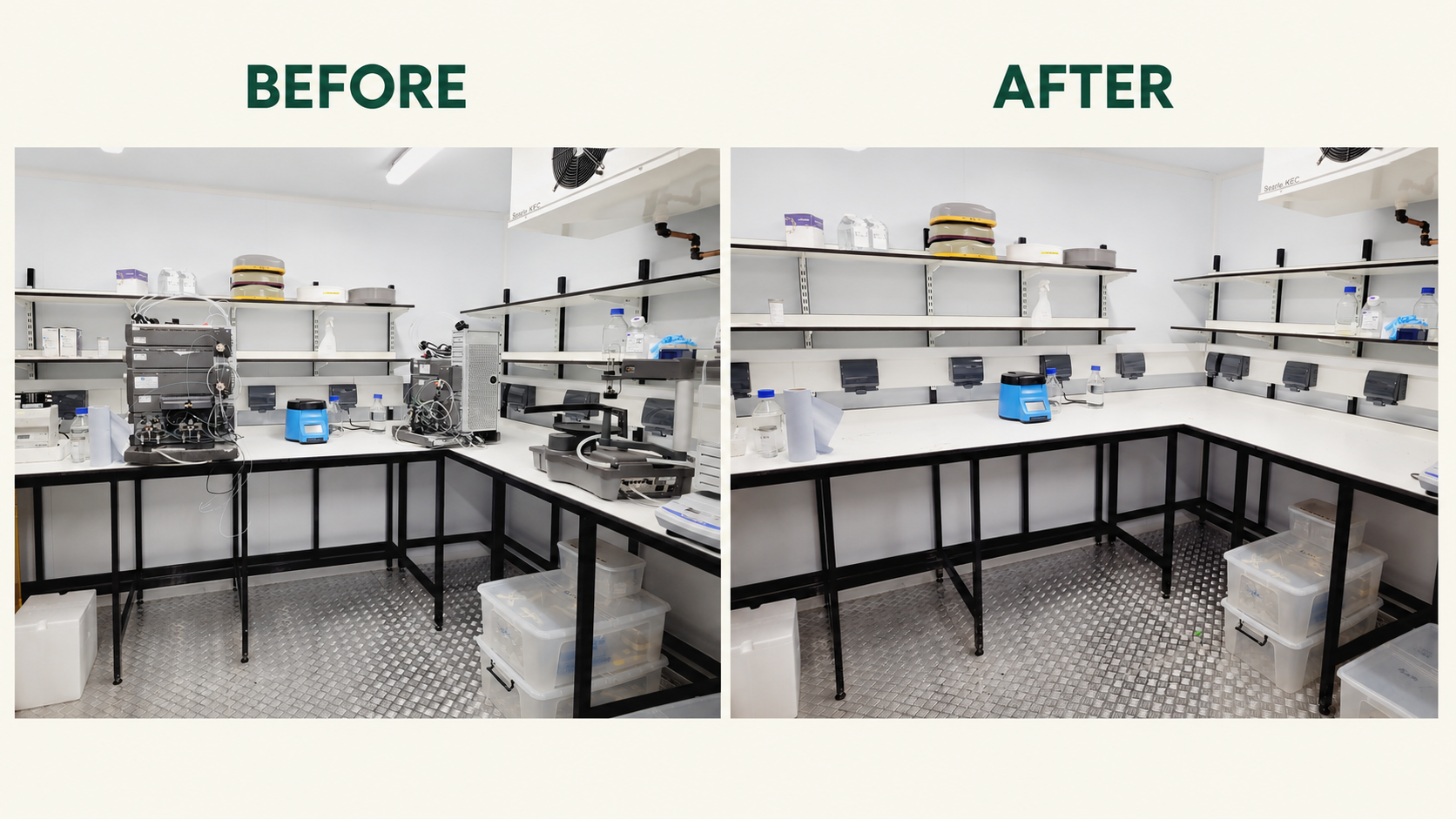
A laboratory saving valuable space by having their surplus lab equipment collected for reuse by UniGreenScheme
Disposal and Waste
When no clear reuse pathway exists, surplus laboratory equipment may ultimately be discarded, recycled prematurely, or treated as waste.
Disposal presents several challenges for laboratories and organisations:
- High costs associated with equipment removal and disposal
- Complex WEEE and environmental compliance requirements
- Potential decontamination needs
- Loss of residual asset value
- Environmental impact from unnecessary waste generation
How Circular Economy Practices Extend Equipment Lifecycles
Circular economy practices help laboratories move away from the traditional “buy and dispose” model by keeping scientific equipment in use for as long as possible. Instead of treating surplus instruments as waste, organisations can recover value through reuse, refurbishment, redistribution, and responsible end of life management.
For many laboratories, this approach creates an opportunity to improve sustainability while also reducing operational and procurement costs.
Reuse and Redistribution
One of the most effective ways to extend the lifecycle of laboratory equipment is through direct reuse. Equipment that is no longer required by one organisation may still be highly valuable to another.
Laboratories often replace equipment due to:
- Changes in research direction
- Facility upgrades
- Project completion
- Department restructuring
- Budget cycles
Through resale, internal redistribution, donations, or specialist laboratory equipment marketplaces, instruments can continue supporting scientific work rather than remaining unused in storage or entering waste streams prematurely.
Commonly reused laboratory equipment includes:
- Centrifuges
- Microscopes
- Incubators
- Laboratory balances
- Fume cupboards
- Freezers and cold storage units
- Chromatography systems
- General analytical equipment
Refurbishment and Recertification
Some laboratory equipment may require servicing, repairs, cleaning, calibration, or testing before it can be reused effectively. Refurbishment helps restore equipment to a reliable operational condition and can significantly extend its usable lifespan.
Depending on the equipment type, refurbishment processes may include:
- Functional testing
- Replacement of worn components
- Electrical safety checks
- Calibration and validation
- Deep cleaning and decontamination
- Software updates or configuration
Parts Recovery and Component Reuse
Not every instrument can be returned to full operational use, but many still contain valuable components and spare parts that can support other equipment.
Parts recovery allows organisations to salvage usable:
- Electronic components
- Power supplies
- Pumps and motors
- Shelving and accessories
- Circuit boards
- Specialist fittings and assemblies
Responsible Recycling
When equipment can no longer be reused, refurbished, or dismantled for parts, responsible recycling becomes the final stage of the circular lifecycle.
Proper recycling helps recover materials such as metals, plastics, and electronic components while ensuring hazardous materials are handled safely and in line with environmental regulations.
However, recycling should generally be viewed as the last option after all reuse opportunities have been explored. Reuse preserves far more environmental and economic value than material recycling alone.
By prioritising reuse first, laboratories can maximise the lifespan of equipment, reduce waste generation, and contribute to a more sustainable and resource efficient scientific sector.
Environmental Benefits of Laboratory Equipment Reuse
Reducing Supply Chain Emissions
Manufacturing new laboratory equipment requires substantial amounts of energy, raw materials, transportation, and industrial processing. Instruments often contain metals, plastics, electronics, refrigeration systems, and specialist components sourced through global supply chains.
When existing equipment is reused instead of replaced, the environmental impact associated with manufacturing a new equivalent product can often be avoided or significantly reduced.
This includes reductions in:
- Carbon emissions from manufacturing
- Raw material extraction and processing
- International shipping and transportation
- Industrial energy consumption
- Packaging waste
Reducing Laboratory Waste
Laboratories can generate large quantities of surplus equipment over time, particularly during refurbishments, relocations, project changes, or facility closures.
Without clear reuse pathways, many items may end up:
- Stored indefinitely
- Disposed of prematurely
- Sent for recycling unnecessarily
- Treated as waste despite remaining functional
Even where recycling is available, reuse generally provides greater environmental value because it preserves the functionality and embedded energy already invested in manufacturing the equipment.
Conserving Valuable Resources
Many scientific instruments contain materials that are resource intensive to extract and process, including metals, rare earth elements, electronics, refrigeration components, and engineered plastics.
Extending equipment lifecycles helps reduce demand for newly manufactured replacements and supports more responsible resource consumption across the scientific sector.
This is particularly important as organisations increasingly look to reduce their environmental footprint while maintaining operational performance and scientific capability.
Supporting Sustainable Procurement Strategies
Sustainable procurement is becoming a growing priority for laboratories, universities, healthcare organisations, manufacturers, and research facilities. Many organisations are now evaluating environmental impact alongside cost, quality, and operational requirements when sourcing equipment.
Purchasing reused or refurbished laboratory equipment can support:
- Net zero and ESG objectives
- Waste reduction targets
- Circular economy strategies
- Sustainable procurement policies
- Environmental accreditation frameworks
Creating a More Sustainable Scientific Sector
The scientific community plays a vital role in addressing global environmental challenges, yet laboratories themselves can be resource intensive environments. Circular economy practices provide an opportunity for the sector to reduce waste while continuing to support innovation, discovery, healthcare, and research.
As awareness of sustainability grows across science and industry, laboratory equipment reuse is helping organisations move towards a more environmentally responsible and financially sustainable future.
Financial Benefits of Laboratory Equipment Reuse
Alongside the environmental advantages, circular economy practices can also deliver significant financial benefits for laboratories and organisations. Reusing, refurbishing, and redistributing laboratory equipment allows facilities to maximise the value of existing assets while reducing unnecessary expenditure on new equipment purchases.
At a time when many organisations are facing tighter budgets, rising operational costs, and increasing pressure to improve efficiency, extending the lifecycle of laboratory equipment can provide both short term savings and long term value.
Lower Procurement Costs
Purchasing refurbished or used laboratory equipment can often provide substantial cost savings compared to buying new instruments.
For many laboratories, reused equipment offers:
- Lower upfront purchase costs
- Access to higher specification equipment within budget
- Reduced lead times compared to new manufacturing
- Greater flexibility for temporary or project based requirements
- Start-up laboratories
- Educational institutions
- Research facilities
- Healthcare organisations
- Industrial laboratories
- Companies expanding testing capacity
Recovering Value From Surplus Assets
Laboratories frequently hold unused or underutilised equipment that still retains financial value. Without a reuse strategy, these assets may remain in storage indefinitely or be disposed of at a cost.
Resale and reuse programmes help organisations recover value from:
- Surplus laboratory instruments
- Unused equipment following upgrades
- Redundant assets from closed facilities
- Equipment no longer required for specific projects
Reducing Storage and Disposal Costs
Unused laboratory equipment can occupy valuable space within laboratories, storage areas, warehouses, and facilities management environments.
Over time, this can lead to:
- Increased storage costs
- Reduced operational space
- Health and safety concerns
- Additional facilities management requirements
- Specialist removal
- Decontamination
- WEEE compliant disposal
- Refrigerant handling
- Certified waste processing
Improving Budget Efficiency
Circular economy practices can help laboratories achieve more from existing budgets by balancing procurement needs with sustainability objectives.
Rather than relying entirely on new purchases, organisations can:
- Source cost effective refurbished equipment
- Reallocate internal assets between departments
- Extend the lifespan of existing instruments
- Reduce unnecessary replacement cycles
Supporting Long Term Sustainability Goals
Financial sustainability and environmental sustainability are becoming increasingly interconnected within laboratory management. Many organisations are now looking for ways to reduce costs while also lowering environmental impact and supporting ESG objectives.
Laboratory equipment reuse provides a practical opportunity to achieve both goals simultaneously. By extending equipment lifecycles and reducing dependence on newly manufactured products, organisations can improve operational efficiency while contributing to a more sustainable scientific sector.
Common Types of Laboratory Equipment Suitable for Reuse
A wide range of laboratory equipment can be successfully reused, refurbished, and redistributed across the scientific sector. In many cases, instruments removed from one laboratory still have years of operational life remaining and can continue supporting research, testing, teaching, healthcare, and industrial applications elsewhere.
While some highly specialised or obsolete systems may have limited reuse potential, many categories of laboratory equipment retain strong demand within the secondary market.
Centrifuges
Centrifuges are among the most commonly reused laboratory instruments due to their durability and long operational lifespan. Benchtop centrifuges, floor standing systems, and refrigerated units are frequently redistributed between laboratories following upgrades or facility changes.
When properly tested and maintained, reused centrifuges can continue operating effectively for many years.
Microscopes
Laboratory microscopes often maintain significant resale and reuse value, particularly within education, healthcare, life sciences, and research environments.
Commonly reused microscope types include:
- Optical microscopes
- Stereo microscopes
- Fluorescence microscopes
- Digital imaging systems
Freezers and Cold Storage Equipment
Laboratory freezers, refrigerators, and cold storage units are essential across many scientific sectors and are regularly reused where equipment remains operational and energy efficient.
Examples include:
- Ultra low temperature freezers
- Biomedical refrigerators
- Cold rooms
- Sample storage systems
Analytical and Testing Equipment
Many analytical instruments retain strong value within the reuse market, particularly where systems can be refurbished, calibrated, or validated for continued operation.
Common examples include:
- Chromatography systems
- Spectrometers
- Balances and scales
- pH meters
- Electrophoresis equipment
- Thermal cyclers
Laboratory Furniture and Infrastructure
Circular economy practices are not limited to scientific instruments alone. Laboratory furniture and infrastructure can also be reused to reduce waste and procurement costs.
Reusable assets may include:
- Laboratory benches
- Storage cabinets
- Fume cupboards
- Safety cabinets
- Shelving systems
- Mobile workstations
Specialist and High Value Equipment
Even highly specialised scientific equipment may have reuse potential where there is demand within research institutions, healthcare environments, industrial laboratories, or international markets.
In some cases, organisations may seek:
- Legacy systems compatible with existing workflows
- Replacement units for discontinued models
- Spare parts and components
- Cost effective alternatives to new equipment
This highlights an important aspect of the circular economy: equipment that is no longer required in one setting may still hold considerable value elsewhere.
As laboratory sustainability continues to gain momentum, the reuse market for scientific equipment is expected to grow further, helping more organisations reduce waste while improving access to affordable laboratory infrastructure.
Challenges in Building a Circular Laboratory Economy
While the benefits of laboratory equipment reuse are significant, implementing circular economy practices within scientific environments is not without challenges. Laboratories often operate within highly regulated, quality sensitive, and technically demanding environments, meaning reuse processes must be managed carefully to ensure safety, compliance, and reliability.
As the circular economy grows within the laboratory sector, organisations are increasingly developing systems and services to overcome these barriers and make equipment reuse more accessible.
Decontamination and Safety Requirements
Many laboratory instruments are used in environments involving biological materials, chemicals, pharmaceuticals, or hazardous substances. Before equipment can be safely reused, appropriate decontamination procedures may be required.
Depending on the equipment and application, this can involve:
- Cleaning and sterilisation
- Hazardous material removal
- Radiological checks
- Certification processes
- Documentation and traceability
Ensuring equipment is properly decontaminated is essential for protecting buyers, logistics providers, engineers, and future users.
Compliance and Validation
Some laboratory environments require strict compliance standards and operational validation processes. Buyers may need assurance that reused equipment remains reliable, functional, and suitable for its intended application.
Challenges can include:
- Calibration requirements
- Performance testing
- Electrical safety compliance
- Software compatibility
- Maintenance history availability
- Manufacturer support limitations
Refurbishment, recertification, and managed resale services help address these issues by providing testing, servicing, and documentation that support buyer confidence.
Logistics and Transportation
Laboratory equipment can be large, heavy, fragile, and highly specialised, creating logistical challenges during collection, transport, storage, and installation.
Some instruments may require:
- Specialist handling equipment
- Temperature controlled transportation
- Secure packaging
- Disassembly and reinstallation
- International shipping coordination
Storage and Asset Visibility
One of the most common barriers to reuse is simply a lack of visibility. Many organisations do not have clear systems for identifying, tracking, or redistributing surplus laboratory equipment.
As a result:
- Usable equipment may remain forgotten in storage areas
- Departments may purchase new equipment unnecessarily
- Assets may lose value over time through inactivity
- Reuse opportunities may be missed entirely
Trust and Transparency
For buyers, purchasing used laboratory equipment can sometimes raise concerns around quality, condition, servicing history, and reliability.
Questions may include:
- Has the equipment been tested?
- Is it fully functional?
- Has it been maintained correctly?
- Are spare parts still available?
- Can the equipment be supported long term?
Moving Towards More Circular Laboratory Systems
Despite these challenges, the laboratory sector is steadily moving towards more sustainable and circular approaches to equipment management.
As organisations continue to prioritise sustainability, cost efficiency, and waste reduction, demand for professional reuse, refurbishment, and resale solutions is expected to grow. With the right processes and support in place, circular economy practices can become a practical and scalable part of modern laboratory operations.
How UniGreenScheme Supports Circular Economy Practices
Creating a more circular laboratory sector requires more than good intentions alone. Organisations need practical, reliable systems that make it easier to reuse, redistribute, and responsibly manage laboratory equipment throughout its lifecycle.
At UniGreenScheme, circular economy principles sit at the core of the organisation’s approach to laboratory asset management. By helping laboratories extend the usable life of equipment through reuse, resale, refurbishment, and responsible recycling, UniGreenScheme supports organisations in reducing waste while recovering value from surplus assets.
Supporting Laboratory Equipment Reuse
Many laboratories hold equipment that is no longer required internally but still retains operational and financial value. UniGreenScheme helps organisations identify reuse opportunities for surplus laboratory equipment rather than allowing assets to remain unused in storage or enter waste streams prematurely.
This includes support for:
- Laboratory clearances and relocations
- Surplus equipment collections
- Asset resale and redistribution
- Equipment reuse initiatives
- Sustainable laboratory decommissioning
Extending Equipment Lifecycles Through Resale and Refurbishment
Many scientific instruments can continue operating effectively for years beyond their original deployment. Through managed resale and refurbishment pathways, equipment lifecycles can be significantly extended.
UniGreenScheme supports the circular economy by helping facilitate:
- Equipment testing and assessment
- Refurbishment opportunities
- Resale of used laboratory equipment
- Recovery of reusable components and assets
- Responsible end of life management
Supporting Sustainability Goals
Laboratories are increasingly looking for practical ways to support sustainability targets, ESG objectives, and net zero commitments. Reuse and circular economy initiatives can contribute to these goals by reducing waste generation and avoiding unnecessary supply chain emissions.
By prioritising reuse before disposal, organisations may be able to:
- Reduce landfill waste
- Lower supply chain carbon emissions
- Improve resource efficiency
- Support sustainable procurement strategies
- Increase visibility of environmental impact
Enabling Greater Access to Laboratory Equipment
Circular economy models can also help improve access to scientific equipment for organisations operating with limited budgets or evolving infrastructure needs.
The reuse market allows laboratories to source:
- Cost effective used laboratory equipment
- Refurbished scientific instruments
- Legacy systems and replacement units
- Specialist equipment with shorter lead times
Supporting the Future of Sustainable Science
As sustainability becomes increasingly important across the scientific sector, circular economy practices are likely to play a growing role in how laboratories manage equipment and resources. Through reuse, redistribution, refurbishment, and responsible asset management, organisations such as UniGreenScheme are helping laboratories move towards more sustainable, efficient, and environmentally responsible ways of operating.
The Future of Sustainable Laboratories
The laboratory sector is undergoing a significant shift as sustainability becomes an increasingly important consideration across research, healthcare, education, and industry. Laboratories are now being challenged to reduce environmental impact while continuing to support scientific innovation, operational performance, and regulatory compliance.
As a result, circular economy principles are expected to become a much larger part of how laboratories procure, manage, and dispose of equipment in the years ahead.
Sustainability Is Becoming a Core Priority
Environmental sustainability is no longer viewed as a secondary consideration within laboratory management. Many organisations are now actively developing strategies focused on:
- Reducing carbon emissions
- Lowering waste generation
- Improving energy efficiency
- Supporting circular economy initiatives
- Meeting ESG and net zero targets
Circular Procurement Is Expected to Grow
Procurement teams are increasingly considering sustainability alongside cost, quality, and operational performance when purchasing laboratory equipment.
This shift is likely to increase demand for:
- Refurbished laboratory equipment
- Reuse and resale programmes
- Equipment take back schemes
- Sustainable procurement policies
- Lifecycle focused asset management
Technology and Marketplaces Are Improving Accessibility
Digital platforms and specialist laboratory equipment marketplaces are helping make circular economy practices more accessible across the scientific sector.
Improved visibility of surplus assets allows organisations to:
- Redistribute unused equipment more efficiently
- Connect buyers and sellers globally
- Extend the lifespan of valuable instruments
- Reduce unnecessary storage and disposal
Reuse Will Continue to Reduce Waste Across the Sector
As awareness grows around the environmental impact of manufacturing and disposal, reuse is expected to become increasingly prioritised ahead of recycling and waste processing.
Many organisations are recognising that:
- Functional equipment should not become waste unnecessarily
- Reuse often delivers greater environmental value than recycling alone
- Extending equipment lifecycles supports both sustainability and cost efficiency
- Circular economy practices can improve overall resource management
A More Circular Future for Science
The future of sustainable laboratories will likely involve a greater emphasis on collaboration, reuse, refurbishment, and responsible resource management across the scientific community.
By embracing circular economy principles, laboratories can help reduce environmental impact while continuing to support research, healthcare, education, and innovation worldwide.
Extending the lifecycle of laboratory equipment is not simply about reducing waste. It is about creating a more resilient, efficient, and sustainable future for science itself.
Frequently Asked Questions
What is a circular economy in laboratories?
A circular economy in laboratories is an approach focused on extending the usable life of laboratory equipment and materials through reuse, refurbishment, repair, redistribution, and responsible recycling. Instead of following a traditional “buy, use, dispose” model, circular economy practices aim to reduce waste and maximise the value of existing resources.
Why is laboratory equipment reuse important?
Reusing laboratory equipment helps reduce waste, lower carbon emissions, conserve raw materials, and reduce demand for new manufacturing. It can also help organisations lower procurement costs, recover value from surplus assets, and support sustainability and net zero objectives.
Can used laboratory equipment still be reliable?
Yes. Many laboratory instruments are designed for long operational lifespans and can remain highly reliable when properly maintained, tested, and refurbished. In many cases, equipment is removed from service due to organisational changes or upgrades rather than equipment failure.
What types of laboratory equipment can be reused?
A wide range of laboratory equipment can be reused or refurbished, including:
- Centrifuges
- Microscopes
- Freezers and refrigerators
- Balances and scales
- Chromatography systems
- Incubators
- Fume cupboards
- General analytical instruments
What happens to old laboratory equipment?
Old laboratory equipment may be reused, refurbished, resold, dismantled for parts, recycled, or responsibly disposed of depending on its condition and suitability for continued use. Circular economy practices prioritise reuse wherever possible before recycling or disposal is considered.
Is buying refurbished laboratory equipment sustainable?
Yes. Purchasing refurbished laboratory equipment can significantly reduce the environmental impact associated with manufacturing new products. It also helps extend equipment lifecycles, reduce waste generation, and support more sustainable procurement practices.
Does reused laboratory equipment help reduce carbon emissions?
Reusing laboratory equipment can help reduce carbon emissions by avoiding or reducing the environmental impact associated with manufacturing, transporting, and packaging new equipment. Extending product lifecycles is considered an important part of reducing supply chain emissions.
What challenges exist when reusing laboratory equipment?
Common challenges include:
- Decontamination requirements
- Compliance and validation processes
- Transportation and logistics
- Storage and asset visibility
- Buyer confidence and trust
How can laboratories become more sustainable?
Laboratories can improve sustainability through a combination of:
- Reducing unnecessary waste
- Reusing and refurbishing equipment
- Improving energy efficiency
- Implementing sustainable procurement policies
- Supporting circular economy initiatives
- Managing assets more effectively
How does UniGreenScheme support laboratory sustainability?
UniGreenScheme supports laboratory sustainability through equipment reuse, resale, redistribution, asset management, and circular economy initiatives designed to help organisations reduce waste and extend the usable life of laboratory equipment.
Conclusion
Laboratory equipment plays a vital role in scientific progress, healthcare, education, and innovation. However, the traditional linear approach of purchasing, using, and disposing of equipment is becoming increasingly unsustainable from both an environmental and financial perspective.
Circular economy practices offer a more responsible alternative. By extending the usable life of laboratory equipment through reuse, refurbishment, redistribution, and responsible recycling, organisations can reduce waste, lower supply chain emissions, and recover greater value from existing assets.
Across the scientific sector, laboratories are facing growing pressure to improve sustainability performance while managing budgets and operational efficiency. Reuse and circular asset management provide a practical way to support both environmental and financial goals without compromising access to essential equipment.
As awareness of sustainability continues to grow, circular economy principles are expected to play an increasingly important role in the future of laboratory management. Equipment that may no longer be required in one facility can continue supporting important work elsewhere, helping create a more resource efficient and sustainable scientific sector.
At UniGreenScheme, supporting laboratory equipment reuse and circular economy initiatives remains a core part of helping organisations reduce waste and extend the life of valuable scientific assets.
If your organisation has surplus laboratory equipment, is planning a laboratory clearance, or is looking to source sustainable laboratory equipment solutions, explore how reuse and circular economy practices can help support your sustainability goals while maximising the value of your assets.
Ready to take the next step?
No comments yet. Login to start a new discussion Start a new discussion